A success story Club La Masò: a quantum leap thanks to Italgreen Padel Madrid, Nov. 17, 2023 -...
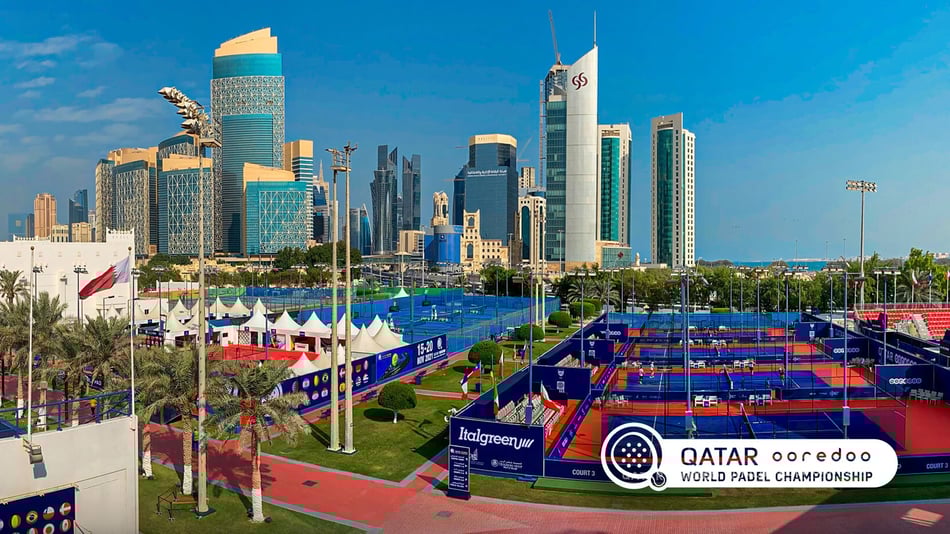
QATAR: FROM DESERT TO 2 WORLD CHAMPIONSHIPS IN 2 YEARS
QATAR.
A small, thin line of desert land facing the Persian Gulf with endless possibilities, where development and innovation merge with the fascinating Arab tradition.
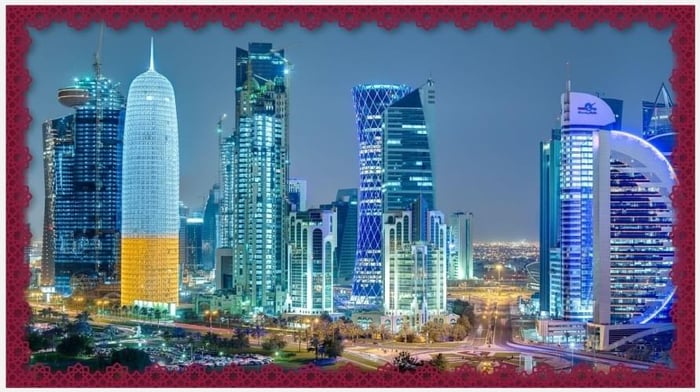
Bordering Saudi Arabia, Qatar is a small state with great influence in the Gulf territories, but arguably less well known than its neighboring and more popular United Arab Emirates; nevertheless, its global prominence is growing steadily thanks to a series of investments in infrastructure development and an administration aimed at international cooperation. The capital city of Doha today represents one of the world's centers for urban and architectural development, with its skyline filled with futuristic skyscrapers that embrace the Arab tradition and the fascinating Middle Eastern cultural heritage.
ECONOMIC DEVELOPMENT
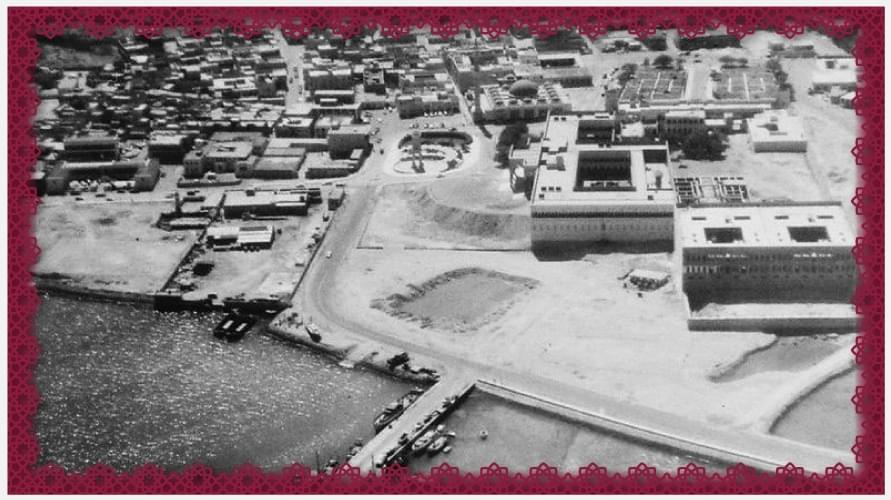
Qatar, until the 1940s, before Oil reserves were discovered, was characterized by an economy based on fishing, small local farms, and pearl mining. An economic system that needed a major boost in order to develop industrially and follow in the footsteps of more advanced countries; this boost came from oil, which, however, until the end of World War II (circa 1947), did not represent a real catapult for the Qatari economy.
The real boom came in the 1960s and 1970s, when worldwide demandfor fossil fuel exploded; this not only increased the country's wealth, but also enabled the development of infrastructure needed to handle oil demand, helping Qatar become an industrialized country and leaving behind an economy based on local activities.
The Qatari rise in recent decades was not only due to the abundant and bountiful amount of coal in the ground, but to the brilliant and progressive political-economic administration that did not want to ''sit on the laurels'' of oil, but to cultivate and increase relations with international partners .
All this has led the small state of Qatar to be among the largest players in the world energy market and the country with the highest growth in per capita income since 2000.
URBAN AND SOCIAL DEVELOPMENT
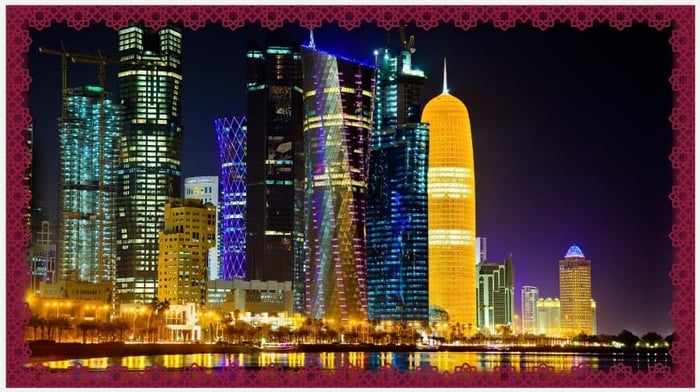
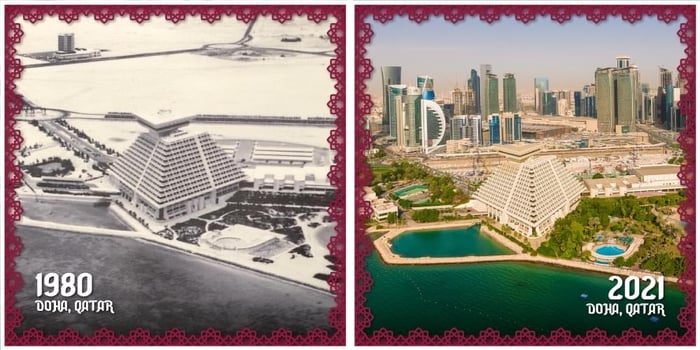
Strong economic growth, of course, has helped Qatar develop in terms of urban planning and infrastructure as well, offering today one of the most striking skylines in the world.
The architectural style of Doha as we see it today was developed mainly by large U.S. and British firms, which designed the capital city along government lines; the goal was to create a futuristic city that could attract foreign investors with capital to invest mostly in energy industries.
Qatari sustainable urban development is based on 4 key points: social, human, economic and environmental.
To date, the living standards of citizens have risen a lot compared to the last 2 decades, so the Qatari government has developed a long-term plan (2030) by which it is committed to ensuring not only a basic level of income for all residents, but also social justice, increased welfare and infrastructure.
Among the projects, the government pushes and incentivizes sports with actions aimed at increasing the country's international fame and notoriety with world-class events; in addition to this, Qatar since 2013 has initiated a series of investment campaigns in frontline sports brands ( e.g. Paris Saint Germain), and globally recognized companies (Barclays, Volkswagen,...)
WORLD CUP
In a little over 30 years, Qatar has gone from being a desert tongue virtually unknown to the world, to being the host country of 2 World Cups in 2 years.
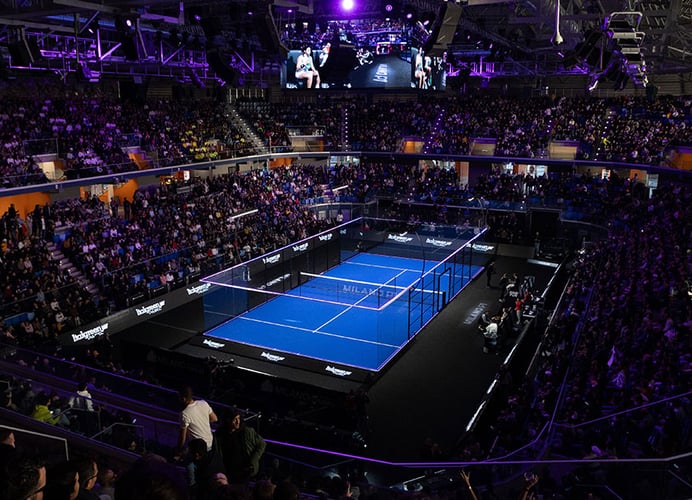
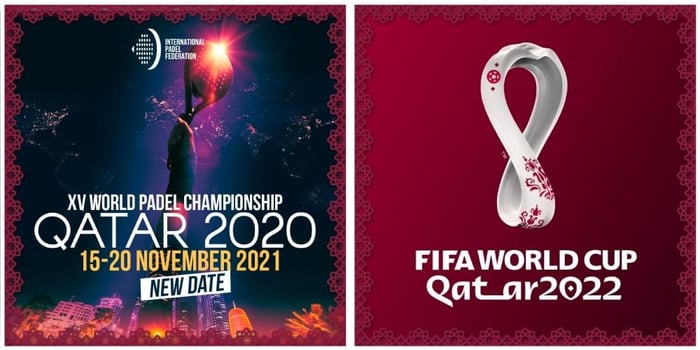
In November 2021 (November 15-20), at the Khalifa International Tennis Complex, the 15th edition of the Padel World Championship will be held; a highly anticipated event, not only because due to Covid-19 it was postponed by 1 year, but because to date, thanks to the incredible growth of padel worldwide, it is predicted to be the Padel World Championship with the most visibility, fascination, and participation in history.
An occasion for the sport and its fans; the first Padel World Cup hosted in Asia, in the Qatari capital Doha. An event to raise awareness of Padel in these countries as well , and to encourage the practice of the sport outside Europe and South America, not only at the amateur level, but also and especially at the competitive level.
The biggest Padel World Cup ever, with 29 participating nations, male and female ready to face each other to become the 15th Padel World Champions. Obviously Argentina and Spain start out favored, but perhaps Outsiders such as Senegal or Iran will be able to challenge the giants of the sport.
A tournament that will be played simultaneously on 10 courts and that will give spectators the chance to enjoy days full of padel, shots and international challenges, not only to the lucky ones present at the Khalifa International Tennis Complex, but also to all the fans at home. In fact, the world championship will be broadcast live on several platforms, to enjoy to the fullest all that this event and this sport can offer.
Italgreen is proud to be the official supplier of the Padel World Cup and to send to Doha all 10 synthetic turfs needed for the tournament's courts; 10 courts with our12 PADEL PRO Blue ready to color the ground for the champions who will compete in Bandejas and Chiquitas shots to reach the roof of the Padel World.
For Qatar, however, it doesn't end there!
Because exactly 1 year later, in November 2022, the World Cup will be hosted. The 2022 FIFA World Cup will not only be the first edition organized in the Middle East, but it will also be the first edition of the FIFA World Cup finals stage played in Winter.
Perhaps this is the most critical and criticized point of the upcoming World Tournament; many argue that it will not only create imbalances in the leagues (which will be reorganized to allow for participation in the 2022 World Cup) and overloads for players who may arrive depleted, but more importantly that the Tournament will lose its centuries-old Summer appeal.
For everyone, since 1930, every 4 years, summer represents the time when with family and friends we get together to cheer on our national team ; in the square, in the heat, by the pool, grilling,... all World Cup ''traditions'' and customs. This time will certainly be different, but that does not mean it will be any less fascinating or engaging.
But why will the 2022 World Cup be played in Winter and in Qatar?
The answer is very simple and almost obvious: temperature. Qatar, given its geographical location and geological conformation, quietly reaches 40°C in summer. A climate that FIFA and the World Commission deemed too high and extreme to play in; therefore, it was organized from November 21, 2022 to December 18, 2022 (Qatar's National Unification Day of 1878).
Why will the 2022 World Cup be played in Qatar, then? FIFA considers Qatar to be an excellent stage to develop soccer at the global level even in countries where it is not the national sport ( Middle East, Southeast Asia,...); moreover, the committee states that ''the quality of global soccer has increased.''
In spite of everything, despite controversy or criticism, the FIFA World Cup 2022 will , as always, be enthralling and evocative; perhaps not as the past editions or with ''the same style,'' but the 48 teams that will face each other will give spectacle and excitement to all fans.
A GLIMPSE INTO THE FUTURE
Qatar for the first time in its history will be in the public eye, literally all over the World; an opportunity to create an image for itself as a strong, important state that can have its say globally.
A true test of organization, development and international openness with which Qatar will not only be able to arouse interest and curiosity from everyone, but also be able to export its artistic and cultural appeal to the whole world.