

The ultimate guide to monofilament turf: performance, durability, and value
Not all synthetic turf fibers are built the same, and the difference shows up the moment players start using the surface. Monofilament turf has become the standard for professional and high-performance fields thanks to how it's made, how it holds up over time, and how it plays.
This guide breaks down what monofilament turf actually is, how it compares to slit-film alternatives, and why it's the right choice for stadiums, universities, and municipal fields alike.
On this page:
- What is monofilament turf? A deep dive into its structure
- The key differences: monofilament turf vs. slit-film turf
- Understanding dual-fiber and hybrid monofilament turf systems
- Why choose Italgreen's monofilament turf for your project?
- Ideal applications for monofilament synthetic turf
- FAQ
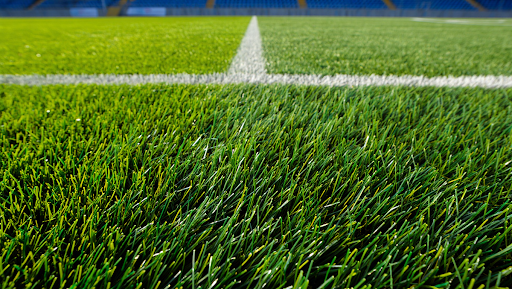
As a decision-maker, you need a solution that is not only high-performing and durable but also backed by an experienced and reliable partner. With over 40 years of research and innovation, Italgreen specializes in providing fully integrated, premium turf solutions. Let's explore why monofilament turf is often the preferred choice for professional and amateur sports facilities worldwide.
WHAT IS MONOFILAMENT TURF? A DEEP DIVE INTO ITS STRUCTURE
At its core, monofilament turf is an artificial grass system where each blade is a single, extruded fiber. Think of it like individual, separate blades of natural grass. These fibers are manufactured through a precise extrusion process, emerging from a spinneret as individual strands. This fundamental structural difference is what gives monofilament turf its unique and highly desirable characteristics.
- Material composition: the fibers are typically made from high-grade polyethylene (PE), a polymer renowned for its softness, resilience, and resistance to UV degradation. This ensures the turf feels comfortable for players while withstanding harsh weather conditions.
- Blade profile: through advanced engineering, these individual fibers can be designed with various cross-sections or 'spines' (e.g., diamond shape, C-shape, S-shape). These profiles add structural integrity, helping the blades stand upright and bounce back after compression, perfectly mimicking the behavior of natural grass.
- Key benefits at a glance: the standalone structure of each fiber results in a playing surface that offers exceptional resilience, a lush and natural appearance, and consistent performance over time.
THE KEY DIFFERENCES: MONOFILAMENT TURF VS. SLIT-FILM TURF
The most common alternative to monofilament turf is slit-film turf. Understanding the direct comparison between these two is essential for making an informed investment. Slit-film fibers start as a wide sheet of plastic that is then perforated or 'slit' to create a mesh-like, honeycomb pattern. While this method is cost-effective, it leads to significant differences in long-term performance and durability.
| Feature | Monofilament Turf | Slit-Film / “Slim Fit” Turf |
| Fiber structure | Single, thicker fibers; each blade is a solid, individual strand. | Thinner fibers cut into strips and interconnected like a mesh. |
| Resilience under heavy use | Fibers spring back upright easily, reducing matting and crushing. | Fibers tend to lay flat over time, losing their original shape. |
| Long-term durability | More resistant to splitting, fraying, and breakage; maintains vertical memory longer. | More prone to fraying and breakdown under intense athletic use. |
| Consistency & safety over time | Provides a more uniform and reliable surface throughout its lifespan. | As it wears, the surface can become less uniform and potentially less safe. |
| Aesthetics (look) | Very natural, grass-like appearance: upright blades, lush and multi-tonal. | Flatter, more uniform look that often appears less natural. |
| Player comfort | Softer, less abrasive feel; reduces risk of turf burns during slides and falls. | Wider, flatter fibers can feel more abrasive on skin. |
| Ball roll performance | More natural ball roll with consistent speed and direction. | Flattened fibers + trapped infill can create a faster, less predictable surface. |
| Cleat interaction | Better cleat release, offering a balanced mix of grip and freedom of movement; reduces joint stress. | Can become overly “grippy,” potentially increasing injury risk. |
| Cost & long-term value | Higher initial investment for a premium system, but superior durability means a longer lifespan, fewer repairs, and less intensive maintenance to keep fibers upright. This lowers operational costs and improves ROI over 10–15 years. | Lower upfront cost can be attractive, but often comes with a shorter lifespan and earlier replacement, leading to a higher total cost of ownership over time. |
BEYOND THE BASICS: UNDERSTANDING DUAL-FIBER AND HYBRID MONOFILAMENT TURF SYSTEMS
Innovation doesn't stop at a single fiber type. Leading manufacturers like Italgreen have pioneered dual-fiber or hybrid systems that combine the best of both worlds. These advanced turfs typically feature a primary monofilament fiber for resilience and aesthetics, paired with a secondary, thinner fibrillated or texturized fiber.
This secondary fiber helps to encapsulate and stabilize the performance infill (like sand or rubber), preventing displacement and reducing 'infill splash'. The result is a state-of-the-art playing surface that offers maximum durability, elite-level performance, and minimal maintenance—a perfect solution for top-tier sports venues.
WHY CHOOSE ITALGREEN'S MONOFILAMENT TURF FOR YOUR PROJECT?
Choosing the right product is only half the battle; choosing the right partner is what guarantees success. Italgreen is not just a manufacturer; we are a fully integrated service provider, guiding you from initial consultation to final installation and beyond.
- 40 years of innovation and research — Our leadership in the synthetic turf industry is built on a foundation of continuous research and development. We don't just follow standards; we set them. Our monofilament turf systems are the result of four decades of refinement, ensuring you receive a product that is at the pinnacle of performance, safety, and durability.
- A fully integrated service: from production to installation — We eliminate the complexity and logistical challenges of managing multiple vendors. As the first Italian company to offer a fully integrated service, we control every aspect of the process—from the extrusion of the yarn in our own facilities to the final installation by our expert crews. This guarantees unparalleled quality control and a seamless project experience for you.
- Certified for top-tier performance (FIFA, World Rugby) — Our monofilament turf systems are designed and tested to meet the stringent requirements of the world's leading sports federations, including FIFA and World Rugby. This ensures your field is not just playable but competitive at the highest level, giving your athletes the safe, high-performance surface they deserve.
IDEAL APPLICATIONS FOR MONOFILAMENT SYNTHETIC TURF
The versatility and superior performance of monofilament turf make it the ideal choice for a wide range of applications:
- Professional soccer and football stadiums: where consistent ball roll, player safety, and broadcast-ready aesthetics are paramount.
- University and high school sports complexes: for multi-purpose fields that need to withstand daily, heavy use from various sports.
- Municipal parks and recreational facilities: offering a durable, low-maintenance solution that provides a safe and attractive space for the community.
- Rugby pitches: where extreme durability and player safety under high-impact conditions are essential.
Still getting familiar with the terminology? Here's how turf differs from artificial grass before you compare your options.
FREQUENTLY ASKED QUESTIONS ABOUT MONOFILAMENT TURF
1. Is monofilament turf more expensive than other types?
2. How long does a monofilament turf field last?
A high-quality, well-maintained monofilament turf system from a reputable manufacturer like Italgreen can last 10 to 15 years, even under heavy use, far outliving lower-quality alternatives.
3. Is monofilament turf safe for athletes?
Absolutely. In fact, it is often considered safer. The individual fibers provide better shock absorption and more predictable footing, and the softer material reduces abrasions. Our systems are designed to meet strict G-Max (shock absorption) and rotational resistance standards to minimize injury risk.
4. What kind of maintenance does monofilament turf require?
All synthetic turf requires maintenance, but monofilament systems are designed to be low-maintenance. Regular grooming to keep the fibers upright and the infill level, along with occasional debris removal and deep cleaning, is all that's needed to ensure peak performance and longevity.
Do you need more information about our artificial turf?