

Covered Padel Courts: a complete guide for clubs and facility owners
Italgreen designs and builds high-quality padel court structures engineered to perform in covered, indoor, and outdoor configurations. This guide covers everything you need to know about covered padel courts: what they are, how they compare to indoor and outdoor courts, the best materials to build one, and how Italgreen can support your project.
In this guide, you can find:
WHAT ARE COVERED PADEL COURTS?
A covered padel court is an outdoor court fitted with a roof or canopy structure that protects players from rain, sun, and wind while keeping the sides open to natural air and light. Unlike a fully indoor court, a covered court preserves the open-air feel of outdoor play while adding weather protection, making it a middle-ground solution between fully open outdoor courts and fully enclosed indoor facilities.
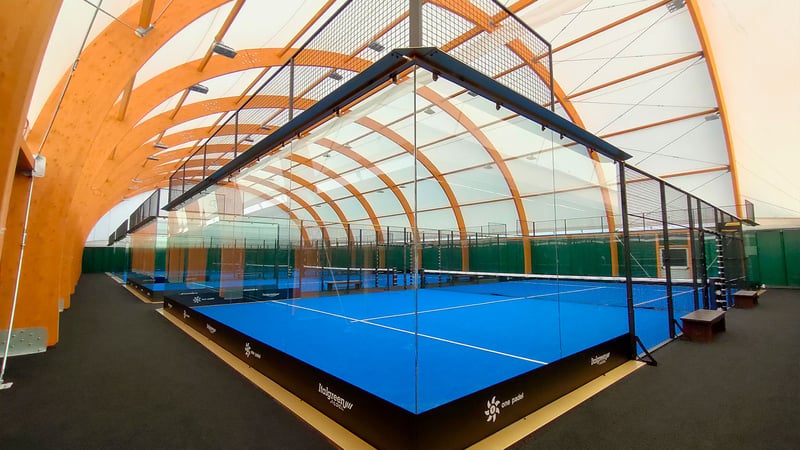
Discover more about our covered padel courts!
COVERED, OUTDOOR, AND INDOOR PADEL COURTS: KEY DIFFERENCES
The right court type comes down to four factors — climate, budget, available space, and how the facility will be used. Here's how outdoor, covered, and indoor courts compare on each:
| Factor | Outdoor court | Covered court | Indoor court |
|---|---|---|---|
| Weather protection | None — fully exposed | Roof/canopy shields rain, sun, wind | Full climate control |
| Natural air & light | Full | Preserved (open sides) | Limited, mechanically controlled |
| Year-round playability | Weather-dependent | High | Highest |
| Construction cost | Lowest | Mid-range | Highest |
| Space & structural needs | Fewer constraints | Roofing structure required | Full enclosure (walls, ceiling height) |
| Acoustic insulation | None | Minimal | Higher |
| Best suited for | Mild climates, budget-conscious projects | Facilities wanting year-round use without full enclosure costs | Premium clubs, extreme climates, multi-use venues |
In short: outdoor courts are the most affordable entry point, indoor courts offer the highest level of control and comfort, and covered courts sit in between, giving facility owners most of the year-round usability of an indoor court at a lower structural cost.
ADVANTAGES OF COVERED PADEL COURTS
A covered court combines the flexibility of outdoor play with much of the reliability of an indoor facility.
The main benefits:
- Weather protection: players are shielded from rain, intense sun, and wind, minimizing match interruptions
- Extended playing hours: combined with lighting, covered courts can be used comfortably day and night
- Lower maintenance, longer lifespan: reduced weather exposure protects the turf and structure over time
- Player comfort: a more stable, consistent playing environment than a fully outdoor court
- Higher revenue potential: more playable hours per day and per year translate into more bookings for clubs and sports centers
Read also: Padel Courts: Benefits, Construction and Installation
MATERIALS FOR COVERED PADEL COURTS
Structural materials
The load-bearing frame is what determines a covered court's durability. Italgreen builds its padel court structures well suited to covered configurations in iron, processed through hot-dip galvanizing and thermo-hardened powder coating. This combination prevents rust and structural degradation, requires minimal maintenance, and is fully compliant with FIT and FIP specifications. Steel and aluminum are the two most common structural choices industry-wide: steel offers maximum durability under environmental stress, while aluminum is lighter and better suited to humid or coastal locations.
Roofing and covering solutions
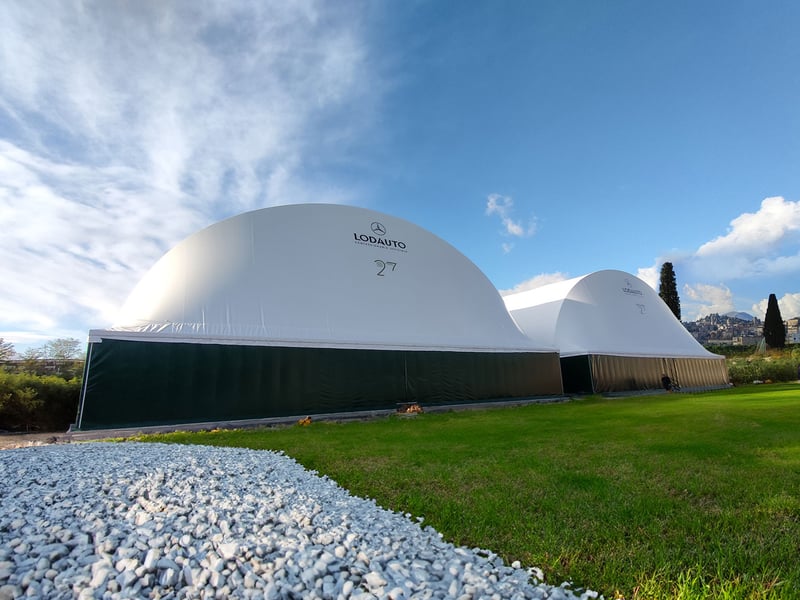
The roofing or canopy is what defines a court as "covered." Common solutions include polycarbonate panels (lightweight, impact-resistant, UV-filtering while allowing light through), metal roofing (highly durable, may need insulation for temperature control), and fabric or tensile canopies (cost-effective, flexible, though less durable than rigid materials). Italgreen offers covering solutions as an add-on service alongside its court structures, tailored to each project's requirements.
Playing surface
The turf is as important as the structure. Italgreen's two padel-specific synthetic turf solutions are:
- Padel Pro: 10mm textured polyethylene fiber, the official FIP turf, engineered for optimal grip and glide during direction changes
- Padel FIB: 12mm fibrillated fiber, designed for high elastic memory and consistent ball bounce
Both are UV- and frost-resistant, built for intensive, year-round use.
BEST LOCATIONS FOR INSTALLING A COVERED PADEL COURT
When considering the installation of a covered padel court, it's essential to identify the ideal location that maximizes its benefits and accessibility. Here are 3 locations to consider for installing this type of padel court:
- Sports Clubs and Recreation Centers are excellent locations for covered padel courts. They often offer a wide range of sports enthusiasts and provide the infrastructure necessary to support various activities. By adding a covered padel court to their facilities, clubs can offer an all-weather playing option, attracting more members and enhancing their overall offerings
- Educational Institutions: schools and colleges can greatly benefit from installing covered padel courts. They provide an opportunity for students to engage in a popular sport while enjoying protection from adverse weather conditions
- Residential Communities such as apartment complexes, housing estates, and gated communities can create a great recreational experience by installing covered padel courts. These facilities offer residents the convenience of having a sport they enjoy right at their doorstep and the possibility to play whenever they want.
STANDARD PADEL COURT DIMENSIONS AND REQUIREMENTS
Regardless of whether a court is outdoor, covered, or indoor, the International Padel Federation (IPF) sets standard dimensions: 20 meters (66 ft) long by 10 meters (33 ft) wide, for a total playing area of 200 m² (2,178 sq ft). A safety perimeter of at least 0.5 m is recommended around the court, bringing the total space required to approximately 231 m² (2,486 sq ft).
Net height is 88 cm at the center, and court lines are 5 cm wide.
For covered courts, the roofing structure must provide enough clearance for unimpeded gameplay (this is defined by the canopy design rather than a fixed ceiling figure). For fully indoor installations, IPF guidance recommends a minimum ceiling height of 6 meters, with a 4-meter back wall and stepped side walls (4 m + 3 m panels) topped with transparent glass for visibility.
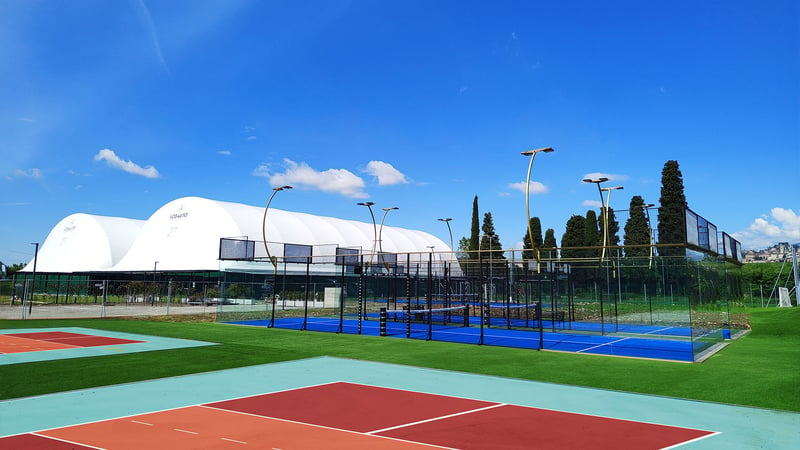
In multi-court facilities, a minimum distance of 4–6 meters between courts is generally recommended to prevent interference between adjacent games; this can be reduced to 1.5–2 meters where space is limited.
WHY CHOOSE ITALGREEN FOR YOUR COVERED PADEL COURT
Italgreen has built more than 2,000 padel courts chosen by top tournaments with structures engineered for outdoor, covered, and fully indoor installations. Working with Italgreen means:
- Full design and construction support, personalized to the specific site and use case
- 100% Made in Italy quality, from structure to turf.
- Turnkey solutions, with the entire construction and installation process managed directly by Italgreen
- Official sponsor of the International Padel Generation
- Institutional partner of ICS (Istituto per il Credito Sportivo), a leading financing provider for sports facilities in Italy
Find out more about how we can manufacture your padel court. Read the article: Padel Court Manufacturers: Why Choose Italgreen
Are you looking for indoor padel courts? Choose real experts!
FAQ
What's the difference between a covered, an indoor, and an outdoor padel court?
An outdoor court has no weather protection. A covered court adds a roof or canopy while keeping the sides open to natural air and light. An indoor court is fully enclosed within a building structure, offering the highest level of climate control and acoustic insulation, but at a higher construction cost.
What are the standard dimensions of a padel court?
Every padel court, regardless of type, measures 20 x 10 meters (200 m² of playing area) per IPF standards. Including the recommended safety perimeter, total space needed is approximately 231 m².
What materials are best for building a covered padel court?
A galvanized steel or aluminum structure paired with a polycarbonate, metal, or tensile fabric roof is the standard choice. Italgreen builds its structures in hot-dip galvanized, powder-coated iron for maximum durability and minimal maintenance.
What synthetic turf is best for a covered padel court?
Italgreen offers Padel Pro (10mm, the official FIP turf) and Padel FIB (12mm, fibrillated fiber for high elastic memory). Both are UV- and frost-resistant and suited to intensive, year-round play.
How long does it take to build a covered padel court?
Timelines vary based on project complexity, existing infrastructure, and local permitting. Italgreen manages the entire process (from design and feasibility to installation) to minimize delays.
Can Italgreen build a multi-court covered padel facility?
Yes. Italgreen has extensive experience designing multi-court facilities, with a recommended minimum distance of 4–6 meters between adjacent courts, adjustable based on the specific layout.