5 min read.
40 Years of Italgreen
Italgreen, the Italian company of reference in the production of synthetic turf and padel fields,...
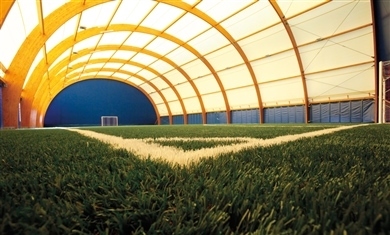
Designing a futsal field isn't just about laying down a surface - it's an engineering process that has to balance regulatory dimensions, ground conditions, and playability from the first inspection to the final brushing of the turf.
Get any of these wrong and the field's performance, safety, and durability all suffer. This article walks through how a professional futsal field is actually designed, step by step, and which synthetic turf solutions work best for the job.
On this page
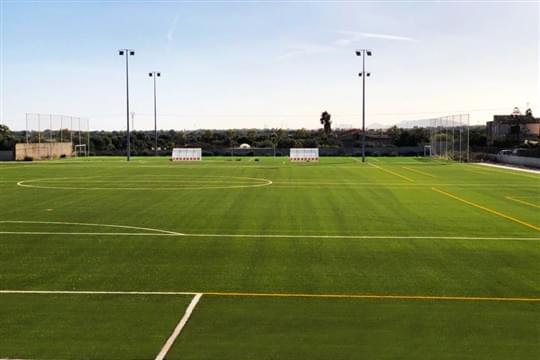
The first step in designing a soccer field is an inspection to verify that the ground has the appropriate characteristics to accommodate the future playing field. These include the dimensions:
At this stage, the topographical survey is crucial and helps to determine the slope of the field, if any. In fact, the surface of the field should be smooth and flat so as to promote spectacular play and ball rolling.
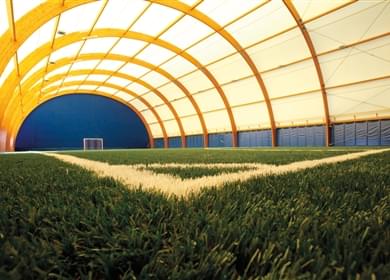
After the inspection
At this point, the actual planning begins, which includes:
Learn more here: Futsal fields: Dimensions, Construction, and Surfaces
In the budget of a soccer field project, there is no lack of synthetic grass entry, because:
It also possesses economic advantages:
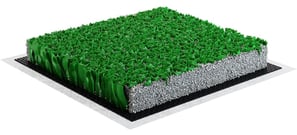 Green HD is the turf we most recommend when we lay a project for a soccer field. It is a type of synthetic grass certified by many national and international sports federations, characterized by:
Alternatively, there are two other types of synthetic grass suitable for soccer fields: DMX and Zerofill.
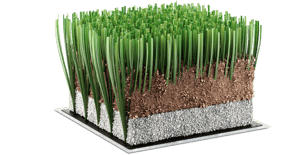 DMX is a two-tone accentuated turf composed of special monofilament fibers that are resistant to weakening by UV rays and frost. It is characterized by:
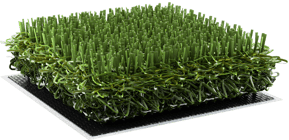
Zerofill is a type of synthetic grass that does not require stabilization and performance infill due to the combination of two types of monofilament polyethylene fibers with high wear resistance. In addition:
We follow you through every stage of the soccer field project up to turnkey delivery